Have you ever asked yourself why short-form videos can suddenly help a small business attract customers every single day? A few years ago, many small and medium-sized companies believed TikTok was merely an entertainment platform for younger audiences. However, if you take a closer look, you’ll notice that TikTok’s loyal user base and average watch time have continued to grow year after year—turning the platform into a marketing channel that businesses can no longer ignore.
TikTok Ads campaigns enable brands to target the right audience with precision, drive engagement, and convert attention into tangible actions—such as visiting a product page, downloading an app, or completing a purchase on a website.
At Smartcom, every TikTok Ads campaign is more than simply placing an advertisement on social media. Instead, we help businesses tell their stories in a way people can genuinely feel—transforming passive views into real interactions. This approach is especially crucial for emerging brands or marketing teams that are still establishing their presence on TikTok.
I. What Are TikTok Ads?
TikTok Ads are paid advertising formats on the TikTok platform that enable businesses to reach users through short-form videos displayed directly within users’ daily content feeds. Unlike traditional ads that interrupt the viewing experience, TikTok Ads are designed to blend seamlessly into the scrolling behavior—allowing brands to appear more naturally in front of their target audience.
At their core, running TikTok Ads is not simply about showcasing a product or service in video form. It is about leveraging TikTok’s content distribution algorithm to increase brand awareness, encourage interaction, and guide users toward specific actions such as visiting a website, exploring an e-commerce store, or completing an online purchase.
In reality, however, not every TikTok Ads campaign delivers the expected results. Unlike static advertising formats, TikTok prioritizes user experience above all else. Viewers will scroll past instantly if the content fails to capture their attention or address what truly matters to them. As a result, the effectiveness of TikTok Ads depends heavily on how a brand tells its story—quickly, clearly, and with enough emotional resonance to keep viewers watching.
II. Key Benefits of TikTok Ads for Brands
- TikTok advertising helps brands rapidly build awareness and engagement by maintaining consistent visibility among users. Creative, entertaining, and interactive videos can spread organically and create viral effects that are difficult to achieve on other platforms.
- With TikTok’s behavioral data and recommendation algorithms, businesses can precisely reach potential customers based on age, interests, and consumption behavior, optimizing campaign efficiency and marketing costs.
- Well-designed TikTok ad campaigns can effectively guide users from awareness to action—from video views to product clicks and online purchases. The combination of engaging content and a strong call-to-action drives high conversion rates.
- Beyond sales, TikTok advertising helps brands build communities and increase customer loyalty. Emotionally engaging videos foster closeness, encouraging users to interact, share, and return repeatedly.
III. The Role of TikTok Advertising in an Integrated Marketing Strategy
TikTok advertising should not be viewed as a standalone channel but as a core component of an integrated marketing strategy. TikTok plays a key role in rapidly building awareness and expanding brand reach, while working alongside platforms such as Facebook, Instagram, and Google Ads to create a multi-touchpoint advertising ecosystem.
Additionally, TikTok provides valuable behavioral data that allows businesses to refine their overall marketing strategies based on real consumer insights. When integrated effectively, TikTok helps optimize marketing budgets, reduce dependence on other paid channels, and establish long-term growth foundations.
IV. Popular TikTok Ads Formats
Understanding TikTok ad formats is the first step to launching an effective campaign—much like choosing premium ad placement in traditional media.
1. In-Feed Ads
Ads that appear directly in users’ content feeds, allowing likes, comments, shares, and direct clicks to landing pages.
Pros:
- Easy to produce and flexible
- Ideal for driving traffic to product pages or landing pages
Cons:
- Weak hooks in the first 2–3 seconds result in fast scrolling
2. TopView (Brand Takeover)
Full-screen ads are displayed immediately when users open the app—similar to standing right at the entrance of a shopping mall.
Pros:
- Strong first impression
- High recall for brand messaging
Note: Higher cost than In-Feed Ads; budget planning is essential
3. Branded Hashtag Challenge
A participation-driven format where brands invite users to create content around a hashtag theme.
Benefits:
- Encourages user-generated content (UGC)
- Builds strong community engagement
4. Spark Ads
Ads that boost existing organic TikTok posts—ideal for leveraging influencer or high-performing content.
Key Advantages:
- Retains original engagement metrics
- Feels natural and authentic
V. Common Mistakes That Reduce TikTok Ads Performance
- Focusing only on polished visuals: Emotion-driven, relatable content often outperforms overly polished videos
- Skipping A/B testing: Testing multiple hooks and formats provides valuable performance insights
- Failing to optimize during campaigns: TikTok Ads require continuous refinement based on performance data
VI. Key Metrics to Evaluate TikTok Advertising Performance
1. Engagement Metrics
Engagement measures how users interact with ads, including views, likes, comments, shares, and saves. High engagement indicates that content resonates with the target audience and increases the likelihood of broader algorithmic distribution.
2. Conversion Rate and ROI
Conversion rate tracks the number of users who take desired actions after viewing ads, such as making purchases, registering, or downloading apps. ROI (Return on Investment) measures cost efficiency and overall campaign effectiveness, helping businesses optimize budgets and performance.
3. Brand Impact
TikTok advertising is not solely sales-driven but also focused on brand building. Metrics such as brand awareness, sentiment, reach, and user perception are critical for refining messaging and shaping long-term strategy.
VII. Top 5 Successful TikTok Advertising Campaigns in 2025
1. Chipotle – #LidFlip Challenge
Chipotle was one of the first F&B brands to harness TikTok’s viral power through user-generated content challenges. The #LidFlip Challenge encouraged users to flip a burrito bowl lid perfectly—a simple yet entertaining action that sparked curiosity and participation.
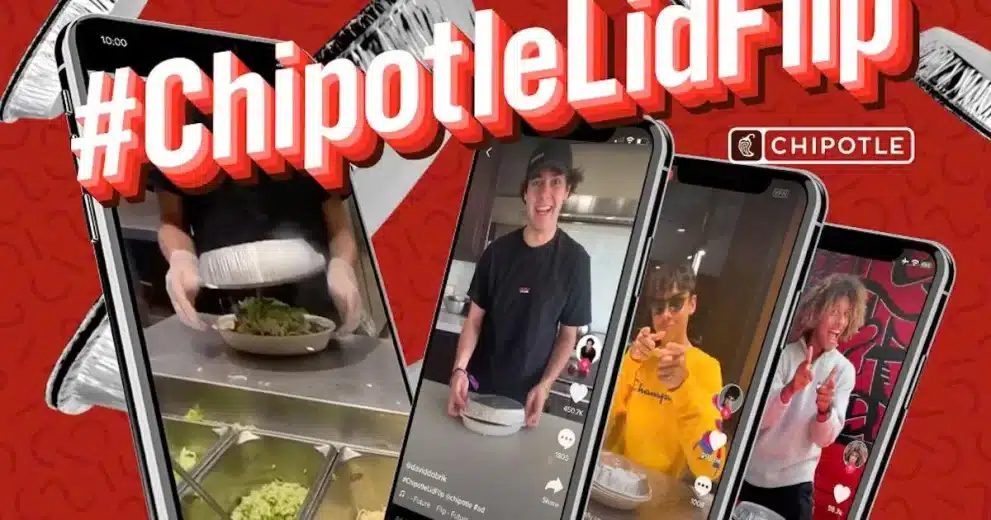
The challenge spread rapidly due to its simplicity and alignment with TikTok’s fun, spontaneous culture. Millions of videos were created, generating massive views and engagement. Chipotle further linked the challenge to online ordering promotions, driving both sales and brand visibility.
2. Guess – #InMyDenim Challenge
Guess launched the #InMyDenim Challenge to refresh its denim brand image among younger audiences. Users created outfit transition videos, starting with casual wear and ending with Guess denim.
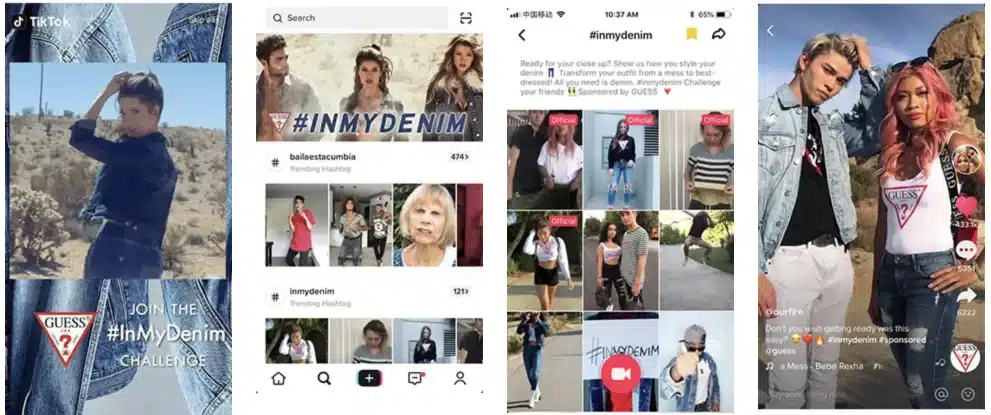
The campaign leveraged TikTok’s visual strengths, particularly transitions and music. By placing products at the center of the content, Guess increased brand recall without appearing overly promotional. Influencer participation helped activate the trend and inspire widespread community involvement.
3. Gymshark – TikTok Fitness Campaign
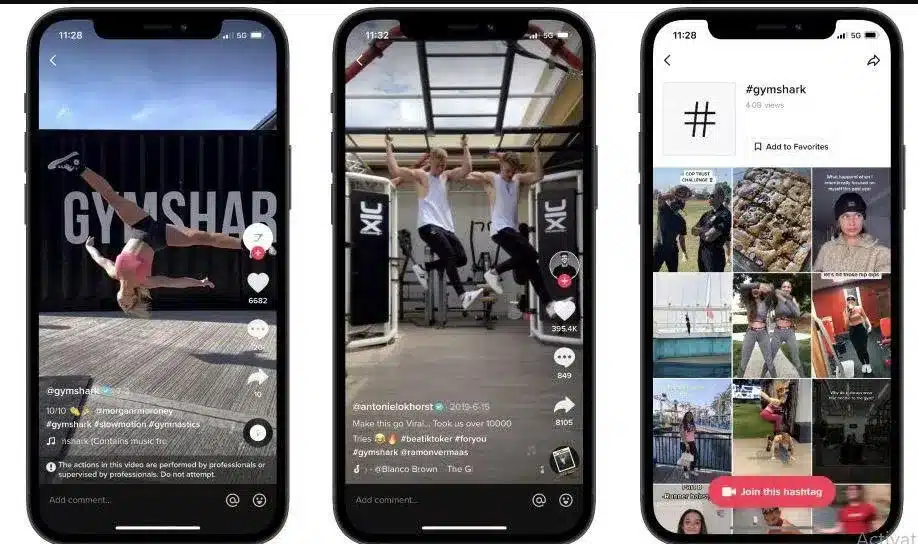
Gymshark focused on the fitness community rather than traditional product promotion. The brand partnered with fitness influencers to produce short workout tutorials, motivational content, and personal transformation stories.
High-energy, concise videos matched TikTok’s fast consumption habits. Products appeared naturally during workouts, enhancing authenticity, trust, and purchase intent while building emotional connections with viewers.
4. NBA – TikTok Highlight Clips
The NBA leveraged its extensive content library to engage younger audiences through short highlight clips. Iconic dunks, game-winning moments, and player reactions were edited into fast-paced, shareable videos.
This approach allowed the NBA to adapt to Gen Z content preferences while expanding its global fan base and maintaining strong brand presence beyond traditional media channels.
5. Crocs – #ThousandDollarCrocs Trend
Crocs generated buzz with the #ThousandDollarCrocs trend, centered on customized and limited-edition designs. The campaign sparked curiosity by asking, “How much can a pair of Crocs be worth?”
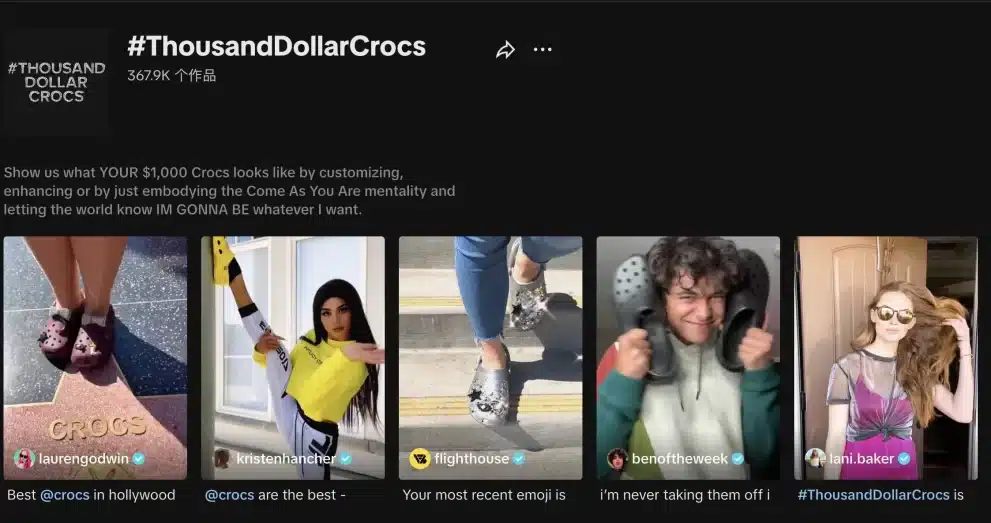
Users eagerly shared creative, high-value, and personalized Crocs designs. The trend was both entertaining and strategic, helping Crocs break outdated perceptions and reposition itself as a youthful, fashion-forward brand.
VIII. Tips to Make TikTok Ads Content More Effective
There is one critical point that many businesses often overlook when running TikTok Ads: advertising effectiveness does not come from how polished or visually perfect a video looks, but from how you communicate with viewers and the story you tell in the very first seconds.
On TikTok, users do not “watch ads” — they only stop scrolling when the content speaks directly to what they care about.
1. Open TikTok Ads with a Question or a Real-Life Situation That Hits the Right Pain Point
A short, well-targeted question can immediately make viewers stop scrolling. For example: “When was the moment you realized customers were abandoning their carts more often than actually buying?”
Hooks like this are not designed to sell right away. Instead, they surface a familiar problem that viewers are already experiencing. On TikTok, the first 2–3 seconds determine whether users keep watching or scroll past. A strong hook usually goes straight to a pain point, curiosity, or a specific concern, rather than slowly introducing the product.
Practical tip: put yourself in the viewer’s position and ask, “If I were the viewer, would this opening line make me stop?”
2. Reduce Traditional Advertising Elements to Make TikTok Ads Feel More Natural
TikTok users tend to avoid content that clearly feels like “an ad.” Direct sales messages, aggressive calls to action, or excessive focus on promotions and features are often skipped almost instantly.
Instead, effective TikTok Ads content usually comes from very relatable, real-life elements:
- Real people: customers, employees, or content creators
- Real experiences: product usage stories or familiar everyday situations
- Short, authentic moments: just enough to feel like a regular TikTok video
This approach makes ads feel less intrusive, reduces the sense of being “sold to,” and increases the likelihood of organic interactions such as comments, shares, or full video views.
3. Use Music and Trends in TikTok Ads Selectively
Music and trends on TikTok change constantly. Chasing every trend not only wastes effort but can also make content feel forced and misaligned with the brand.
What matters is not how fast you follow trends, but whether you choose the right ones. If a song, format, or trend helps clarify or strengthen your message, it is worth using. If it feels irrelevant or distracts from the core story, it is better to skip it.
In TikTok Ads, trends should support the content — not become the focal point that overshadows the brand message.
IX. FAQs
1. Are TikTok Ads suitable for small businesses?
Yes. TikTok Ads work well for small businesses thanks to flexible budgets and precise audience targeting. With creative content that resonates with users, brands can achieve strong engagement and conversions without spending as much as on traditional advertising platforms.
2. Which TikTok Ads format should beginners choose?
For beginners, In-Feed Ads and Spark Ads are ideal starting points. These formats are cost-effective, easy to manage, and allow brands to test different messages and creatives before scaling to more advanced ad formats.
3. What should businesses prepare before running TikTok Ads?
Before launching TikTok Ads, businesses need a TikTok account registered with an email or phone number, a conversion-optimized landing page, a sufficient library of ad videos, and an international payment card such as Visa or Mastercard. Proper preparation ensures smoother campaign execution and more effective performance optimization.
4. Why do many TikTok Ads campaigns fail?
Common reasons include content that doesn’t match TikTok user behavior, lack of A/B testing, and minimal optimization after launch. TikTok prioritizes user experience, so overly promotional or data-ignored ads often underperform.
5. What should Vietnamese businesses focus on for better results?
Vietnamese businesses should prioritize content over budget when running TikTok Ads. Effective videos capture attention within the first three seconds, clearly present problems and solutions, and avoid overly promotional messaging. Continuous testing and aligning TikTok Ads with an overall marketing strategy help optimize costs and achieve sustainable results.
6. What makes Smartcom different when running TikTok Ads campaigns?
Smartcom goes beyond ad execution by building TikTok Ads strategies focused on long-term growth. By combining data-driven insights, creative storytelling, and continuous optimization, Smartcom delivers real business value instead of chasing vanity metrics or short-term trends.
X. Conclusion
TikTok advertising is no longer optional—it is a strategic growth driver for modern brands. With precise targeting, immersive user experiences, emotional storytelling, and strong brand-building capabilities, TikTok has proven its value within today’s advertising ecosystem.
To succeed, businesses must invest in strong content strategies, leverage user insights, collaborate with influencers, and continuously measure and optimize performance. When executed effectively, TikTok becomes a powerful engine for sustainable growth, higher engagement, stronger conversions, and long-term brand value.
Smartcom is a strategic partner for businesses running TikTok advertising and digital marketing, backed by over 10 years of hands-on experience and a team that has managed large-scale campaigns across industries. Rather than chasing trends or volume, Smartcom focuses on long-term growth strategies, real performance outcomes, and transparent metrics.
With an end-to-end service model—from strategic consulting and content creation to campaign execution, measurement, and data-driven optimization—Smartcom operates as an in-house marketing team, proactively supporting clients 24/7. This responsible, flexible, and transparent approach helps businesses—especially those without internal marketing teams or undergoing expansion—maximize campaign performance and build sustainable competitive advantages in the digital market.