In the context of the publishing industry facing declining organic traffic, the rise of AI, and challenges around public trust, traditional newsrooms are increasingly turning to marketing campaigns.
These campaigns help journalism redefine its role in the data-driven society, strengthen credibility, and build trust with readers.
2025 marks a turning point, as leading publishers like Reuters, The Guardian, The Heart, and MarketWatch leverage marketing campaigns to demonstrate their value, expand their audience, and shape “journalism as a brand” in a highly competitive digital era.
I. Context and Challenges for the Publishing Industry Amid the Boom of Marketing Campaigns
1. Drop in Organic Traffic
The publishing industry is facing a significant decline in organic traffic as platforms like Google, Facebook, and X adjust their algorithms to deprioritize news. At the same time, users increasingly turn to AI-powered tools like ChatGPT or Perplexity for information. This shift weakens the “distribution gateway” role of traditional platforms, forcing newsrooms to proactively reach audiences rather than rely on spontaneous traffic.
As Mark Silver from Code and Theory notes, today’s readers make decisions based on brand trust, making marketing campaigns a strategic tool for publishers to maintain audience reach in a rapidly changing distribution landscape.
2. The AI Era: Journalism Must Show Its Role and Data Value
The rise of AI has created a new layer between readers and information, reducing journalism’s central role in the discovery process. Paradoxically, AI still relies on journalistic data to function effectively.

Licensing agreements between major publishers and tech companies like OpenAI, Anthropic, and Google show that journalism holds the essential resources AI needs to generate accurate answers. However, most of the public is not fully aware of this value, which makes the role of journalism “invisible.” This is why newsrooms need to run marketing campaigns to redefine their work, emphasizing that the processes of verification, editing, and news production not only serve readers but also provide high-quality data for the AI ecosystem.
3. Building Trust During a Media Credibility Crisis
Alongside technological shifts, journalism is facing a serious trust crisis caused by political polarization, misinformation, and direct attacks on the credibility of media organizations.
In a context where the public is increasingly skeptical about objectivity, branded marketing campaigns have become a key tool for newsrooms to reaffirm editorial principles, transparency, and commitment to the truth. This is not just a promotional effort but a proactive strategy to reshape public perception and protect brand reputation amid pressures from both political environments and unofficial information sources online.
II. Notable Marketing Campaigns in the Publishing Industry in 2025
1. Reuters – “Pure News, Straight from the Source.”
At the end of October, Reuters launched its first marketing campaign in 175 years, titled “Pure News, Straight from the Source,” amid the global spread of fake news and misinformation. The 2025 Digital News Report from the Reuters Institute shows that more than half of survey respondents worldwide expressed concerns about the accuracy of the news they access online; in the U.S., this figure rises to 73%, highlighting the growing challenge of distinguishing fact from fiction.

The campaign uses the imagery of flowing water as a central metaphor: the further water moves from its source, the more likely it becomes cloudy – just as information can be distorted when passed through multiple layers. This concept is visualized in the campaign’s main film, depicting a world where people unconsciously drink murky water, symbolizing society gradually accepting and “consuming” misinformation, blurring the line between truth and fabrication.
2. The Guardian – “The Whole Picture.”
Over the past decade, The Guardian has worked to expand its influence beyond its UK roots, aiming to build a global readership community. In the U.S, a large and diverse market, the news brand saw an opportunity to strengthen its presence. As a result, in September this year, The Guardian officially launched its first major marketing campaign in the United States, marking a strategic step to consolidate its position in this market.
The campaign, titled “The Whole Picture,” highlights The Guardian’s identity as an independent, global, and freely accessible media organization, capable of providing U.S. readers with an international perspective across news, culture, sports, and lifestyle. In collaboration with Lucky Generals, the campaign was deployed across New York’s subway system on key lines and stations, and featured on digital billboards in high-traffic locations such as Moynihan Train Hall (Penn Station) and areas opposite Madison Square Garden.
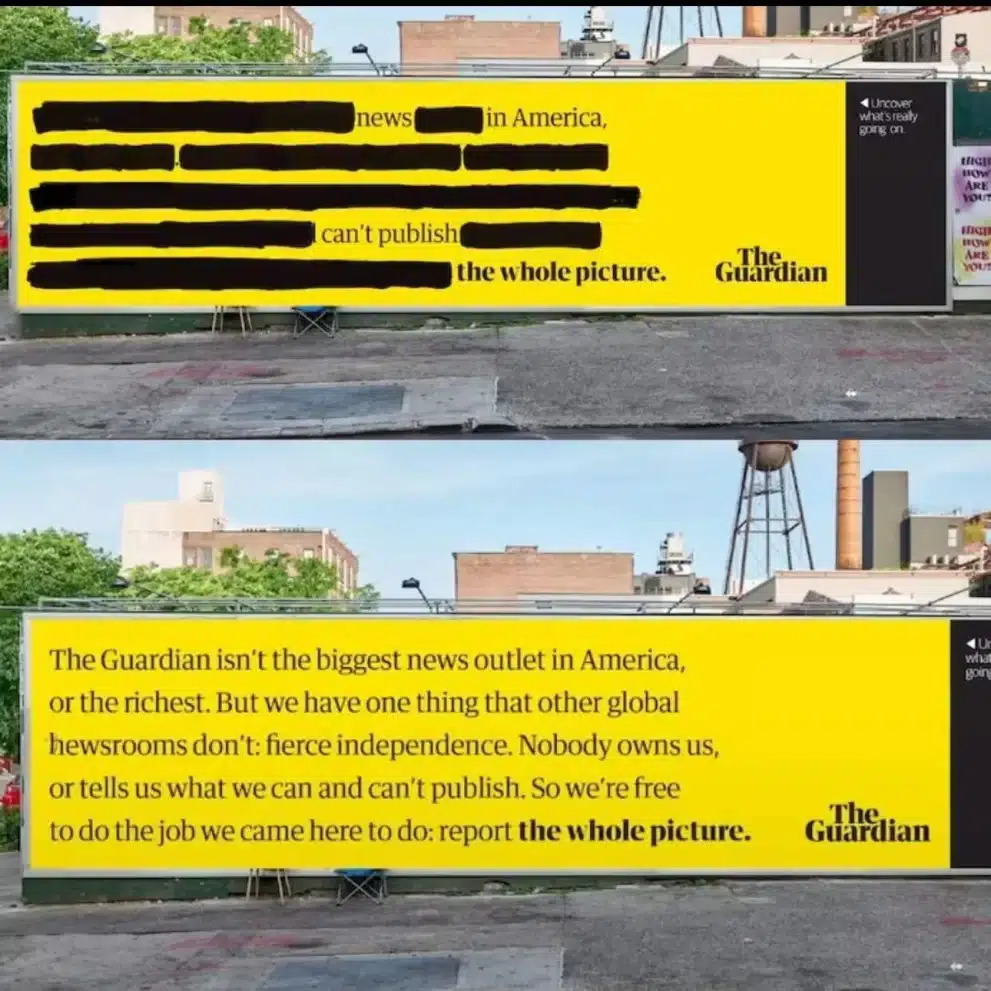
At the end of September, The Guardian made a strong impression with an interactive billboard in Manhattan’s Meatpacking District, where passersby could “peel away” blacked-out sections to gradually reveal the full message: “news in America can’t publish the whole picture.” This visually creative and impactful approach emphasized The Guardian’s commitment to independence in journalism.
3. Hearst x PMG – “There’s More with the Chronicle.”
In the first quarter of this year, Hearst Newspapers launched a multi-market marketing campaign titled “There’s More with the Chronicle.” With this campaign, the company aimed to emphasize the core value of journalism and the progress it has made in digital storytelling. The campaign focused on showcasing the breadth and depth of its reporting, along with digital innovations that help readers engage with issues affecting their communities and the wider world today.
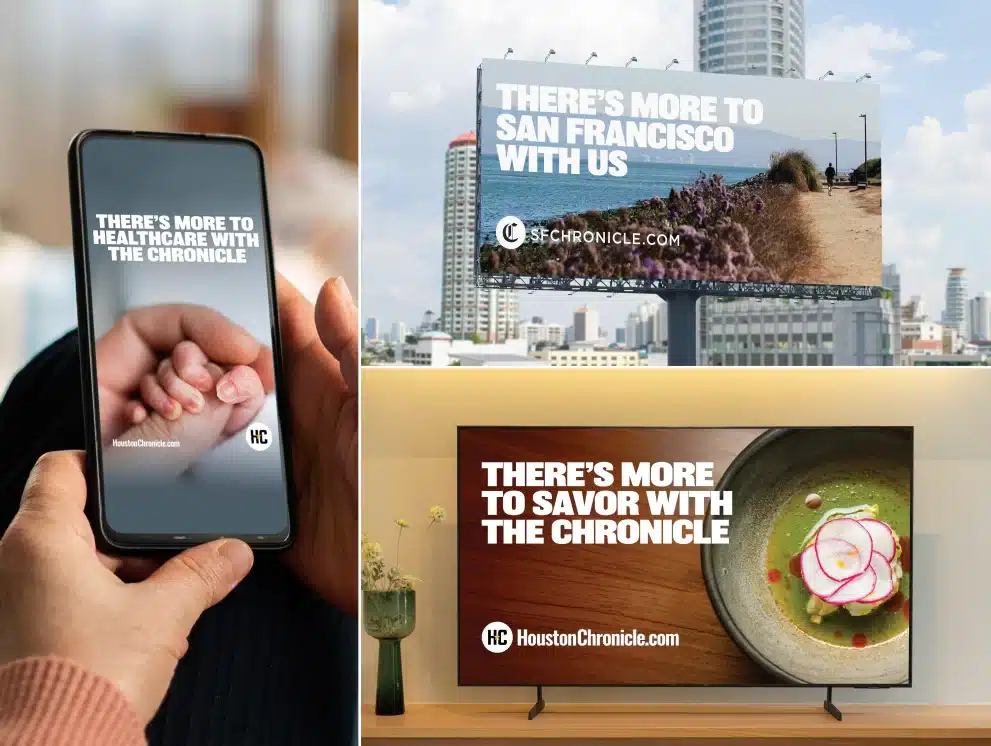
“There’s More with the Chronicle” reflects Hearst’s commitment to expanding the digital experience while preserving the spirit of traditional journalism – a blend of classic news topics and modern lifestyle content. At the messaging level, the campaign highlights the power of local journalism and immersive digital experiences, creating stronger connections with today’s audience.
4. MarketWatch – “Don’t Short Yourself.”
MarketWatch, a leading financial news publication, recently launched a new marketing campaign targeting Millennials and Gen Z, titled “Don’t Short Yourself.” The campaign emphasizes the importance of staying informed about personal finance and making smart decisions for the future, rather than letting opportunities pass by.
Developed by Mother & Mother Design, the campaign runs across digital platforms and social media, with online ad placements directing audiences to in-depth MarketWatch articles. The content focuses on practical topics such as home buying, investment planning, personal finance management, and retirement preparation, helping young readers access financial information in an easy-to-understand and useful way. The target audience is adults aged 25 – 42, who are in the stage of building the foundation for their personal investment portfolios. This is particularly significant as MarketWatch subscriptions have doubled over the past three years, reflecting growing trust in the brand’s ability to guide readers in today’s challenging financial landscape.

With “Don’t Short Yourself,” MarketWatch not only reinforces its image as a reliable financial news source but also reaffirms its commitment to providing practical, actionable insights that empower Millennials and Gen Z to confidently manage their finances and plan for a sustainable future.
III. Long – term Impact of Marketing Campaigns on the Future of Publishing

1. Attracting Readers and Building a Loyal Community Around News Brands
Well-executed marketing campaigns help publishers build a trustworthy image in the eyes of their audience. When messages are consistently communicated, readers can easily recognize the value the brand offers, fostering long-term engagement. Maintaining high – quality content alongside stable delivery encourages repeat visits and increases subscription conversion rates.
At the same time, marketing campaigns allow publishers to gain deeper insights into audience behavior through data and feedback. This enables them to tailor content for different segments, optimize user experiences, and enhance loyalty. Such a foundation is essential for the publishing industry to ensure sustainable growth in an increasingly competitive landscape.
2. Strengthening Competitiveness Against AI and Social Media
In an era where AI and social media platforms generate an overwhelming amount of information, marketing campaigns help publishers highlight their unique value. By emphasizing accuracy, depth, and professional responsibility, publishers can position themselves as trusted sources amid the noisy “information sea.” This approach attracts readers who prioritize quality over quantity.
Additionally, marketing campaigns offer opportunities to enhance brand reach and recognition by leveraging multiple platforms. When executed strategically, publishers can compete effectively with automated content while gaining an advantage through human insight and expertise. This becomes a crucial tool for the publishing industry to maintain its position in the technology-driven landscape.
3. Entering the Era of “Journalism as a Brand.”
Modern marketing campaigns go beyond promotion – they play a key role in shaping the brand identity of news organizations. Through consistent communication in tone, visuals, and messaging, each publisher can build a distinct identity that stands out in the market. This makes it easier for readers to recognize and remember the brand as they consume information.
Moreover, investing in marketing campaigns paves the way for the publishing industry to enter a new era, where each newsroom operates as an inspiring brand. When core values are clearly and consistently expressed, a news brand becomes a strategic asset, helping expand the audience base and increase social impact. This is a crucial step for journalism to achieve sustainable growth in the future.
IV. Conclusion
In conclusion, 2025 marks a pivotal year for the publishing industry, as marketing campaigns become strategic tools that help news organizations redefine their role, strengthen credibility, and build lasting relationships with readers. These campaigns not only support audience growth and foster loyal communities but also enable newsrooms to showcase the value of their content, analytical depth, and editorial independence amid increasing competition from AI and social media.
The mindset of “journalism as a brand” has become a crucial foundation for the publishing industry to adapt to the digital era, maintain its position, and develop sustainable business models for the long term.
In this journey, Smartcom – a marketing agency with over 10 years of experience in creative strategy and executing marketing campaigns- serves as a trusted partner for publishers and businesses alike. With its expertise in creative solutions, Smartcom helps craft unique campaign ideas, build strong brand presence, and foster deeper connections between news organizations and their audiences. This foundation allows marketing campaigns to achieve maximum impact while driving sustainable growth for the publishing industry in the years ahead.